
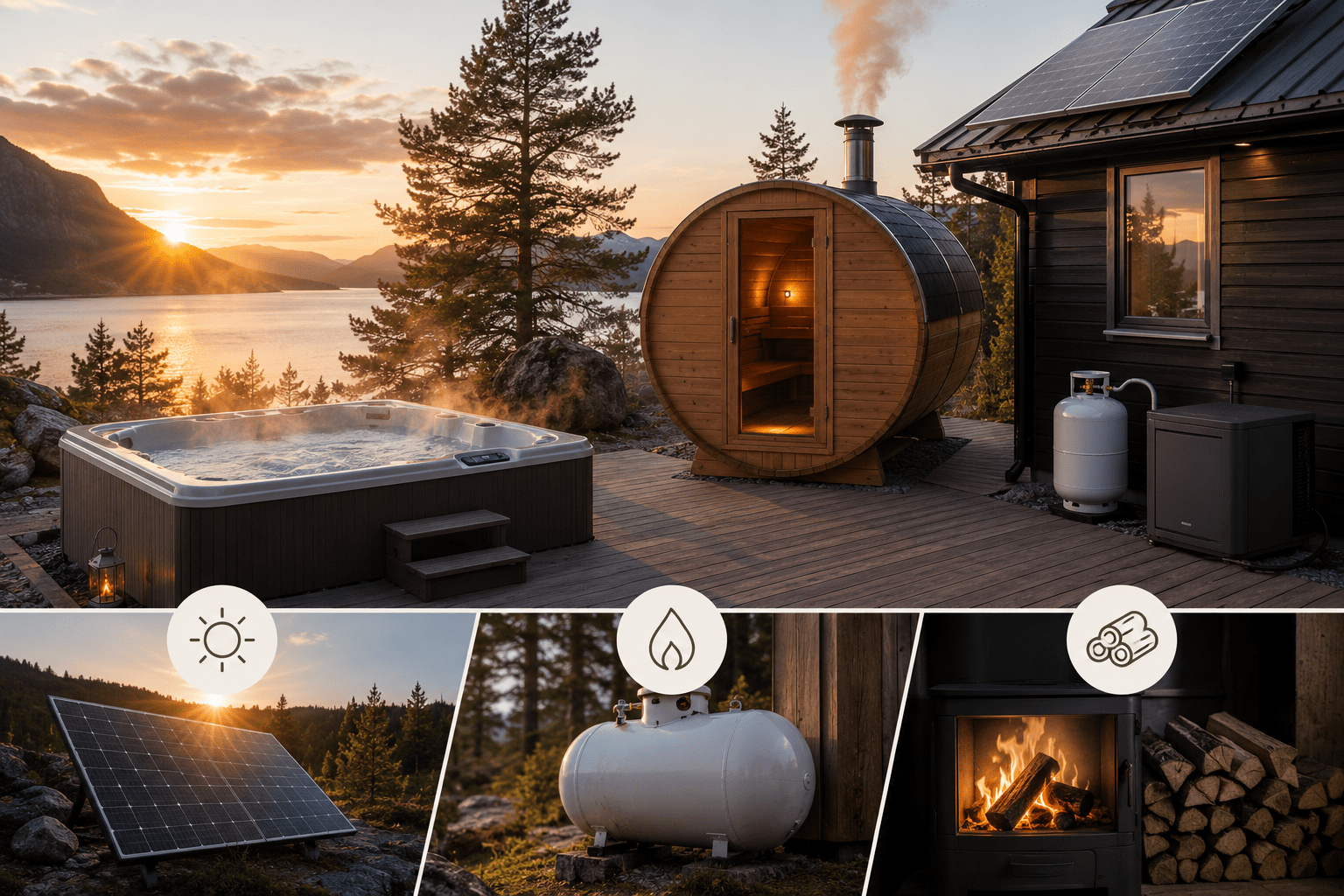
If your property is off-grid, remote, or simply doesn’t have easy access to standard utilities, adding a spa can still be absolutely possible. The key is to match your sauna and hot tub setup to the power and fuel sources you already have—or realistically can install. Whether you’re running on solar, propane, wood, or a mix of these, there are practical ways to create a comfortable, reliable off-grid spa.
Many cabins, rural homes, and tiny communities already use wood and propane for heating and cooking, so extending that logic to your spa is a natural next step. With thoughtful planning, you can enjoy a barrel sauna and hot tub without needing a full grid connection.
Wood-Fired Saunas: The Classic Off-Grid Choice
Wood-fired saunas are the most traditional off-grid option:
- They use a simple wood stove instead of electric heaters.
- All you need is a supply of dry firewood and a safe place to store it.
- They work independently of electricity, making them ideal for truly remote sites.
For hot water and heating, some setups use:
- A wood stove that heats both the sauna air and water in a separate tank.
- A separate wood-fired water heater for the hot tub.
When choosing a wood-fired sauna, look for:
- Efficient stove designs that use less wood.
- Good insulation in the sauna to reduce heat loss.
- Clear guidance on fire safety and clearance from structures.
Explore barrel sauna kits from Backcountry Recreation, many of which include wood-burning stove options designed specifically for off-grid use.
Propane and Gas Options for Heating Water
Propane can be a great backup or primary heat source for your hot tub:
- Propane heaters can warm water quickly without needing electricity.
- They’re compact and easy to install compared to large wood systems.
- They work well in colder climates where you want consistent heat.
Key considerations:
- Ensure your propane tank is sized for regular spa use.
- Route gas lines safely, away from foot traffic and flammable materials.
- Use certified heaters designed for outdoor and water-contact use.
Propane can also support:
- Small electric pumps powered by a generator or solar system.
- Automated temperature control if you add a basic controller.
For combinations of wood and propane systems, check wood-fired and electric hot tubs at Backcountry Recreation, where you can see how different heating methods are integrated into real setups.
Solar Power for Electric Saunas and Hot Tubs
If you have or plan to install a solar system, you can power:
- Electric sauna heaters (with enough capacity).
- Hot tub pumps, controllers, and sometimes heating elements.
To make this work:
- Calculate your energy needs:
- Sauna heater: often 3–10 kW depending on size.
- Hot tub pump and controls: much lower, usually under 1 kW.
- Ensure your solar array and battery bank can handle peak loads.
- Consider a hybrid system that uses solar during the day and propane or a small generator at night or in winter.
Solar is especially attractive for:
- Eco-conscious owners who want a low-carbon spa.
- Properties where adding grid power is expensive or impractical.
- Remote cabins where you already use solar for lights and appliances.
Many outdoor sauna options from Backcountry Recreation can be adapted to solar setups with the right electrical planning and component choices.
Combining Systems for Flexibility
In many off-grid situations, a single system isn’t enough. A flexible approach might include:
- Wood for the sauna (no electricity needed).
- Propane or a small solar-pumped system for the hot tub.
- A backup generator for high-demand periods or winter use.
This mix:
- Reduces reliance on any one fuel source.
- Gives you options if wood is scarce or the sun isn’t cooperating.
- Helps keep costs manageable over time.
Practical Off-Grid Tips
- Plan your spa near existing power or fuel sources to cut installation costs.
- Use energy-efficient pumps and heaters to lower your load.
- Store wood and propane safely, away from the spa and any children’s areas.
- Set clear usage rules so you don’t overuse fuel or drain batteries too quickly.
Your Off-Grid Spa Is Within Reach
Off-grid living doesn’t mean you have to skip the spa. With wood, propane, and solar, you can create a reliable, comfortable system that fits your lifestyle and property.
If you’re designing a remote setup, start by reviewing outdoor sauna options from Backcountry Recreation and their off-grid-friendly heating choices. For broader ideas on off-grid energy, check Solar Power World for solar system tips, and Off-Grid Net for practical cabin and remote living guides.